Regional Americana • Est. Lancaster Directory

Curated American Vintage Finds & Forgotten Household Artifacts

A specialist specification directory documenting enduring utilitarian antiques from New England parlors, Pennsylvania Dutch hearths, and Heartland farmsteads—preserved for collectors who value honest joinery, original patina, and documented American craft.

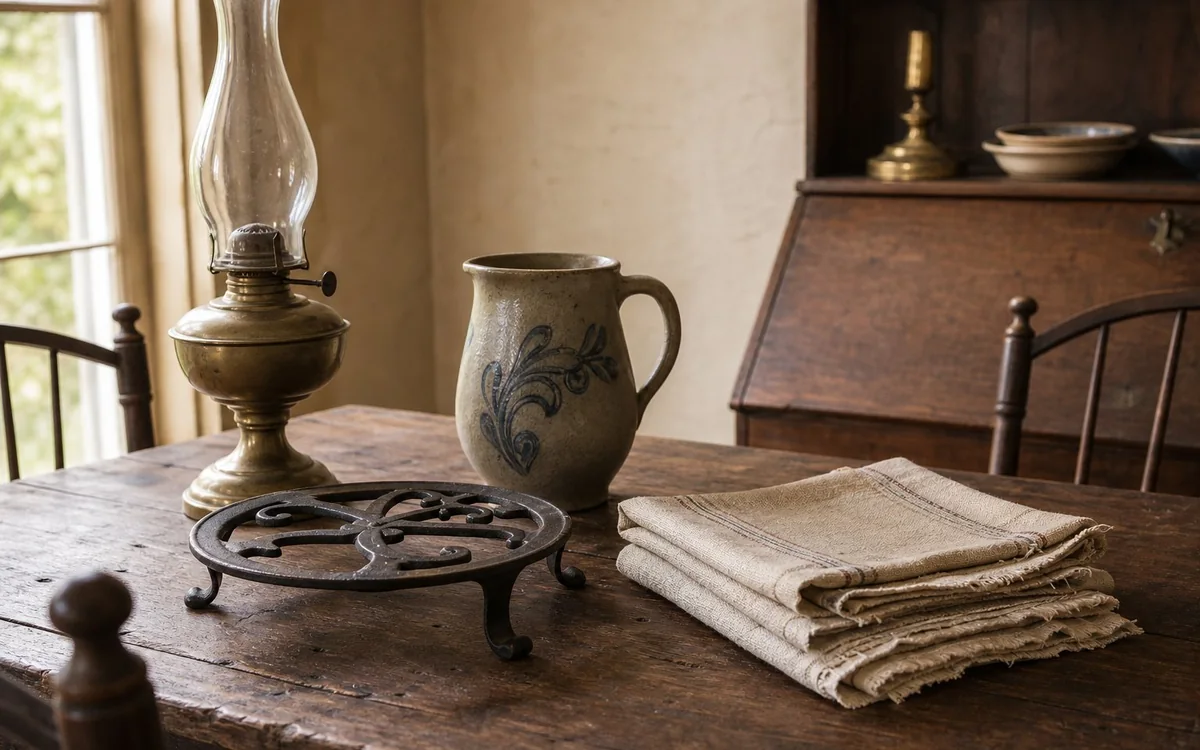
Sunlit antique walnut parlor table displaying brass oil lamp, stoneware pitcher, and iron trivet
Archival Plate 01 — Early American parlor assembly featuring an early brass oil lamp, cobalt-brushed salt-glazed stoneware pitcher, wrought-iron hearth trivet, and folded unbleached homespun linen on aged black walnut.
Interactive Directory

Filtered Artifact Specification Explorer

Sort documented household relics by domestic craft discipline, compare period joinery and material signatures, and inspect individual condition notes.

Showing 6 documented American household artifacts

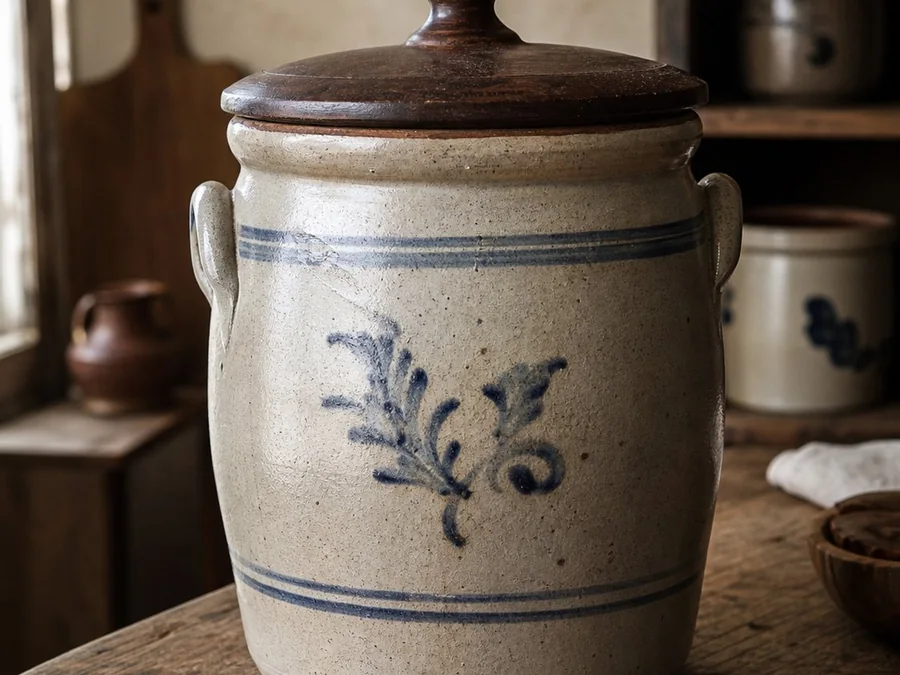
Nineteenth-century American salt-glazed stoneware crock with cobalt floral motif and hardwood lid
CAT-1884-PA Pennsylvania Dutch

Cobalt Salt-Glazed Stoneware Crock

Wheel-thrown two-gallon pantry vessel featuring brushed cobalt floral slip decoration, extruded lug handles, and an aged turned walnut cover.

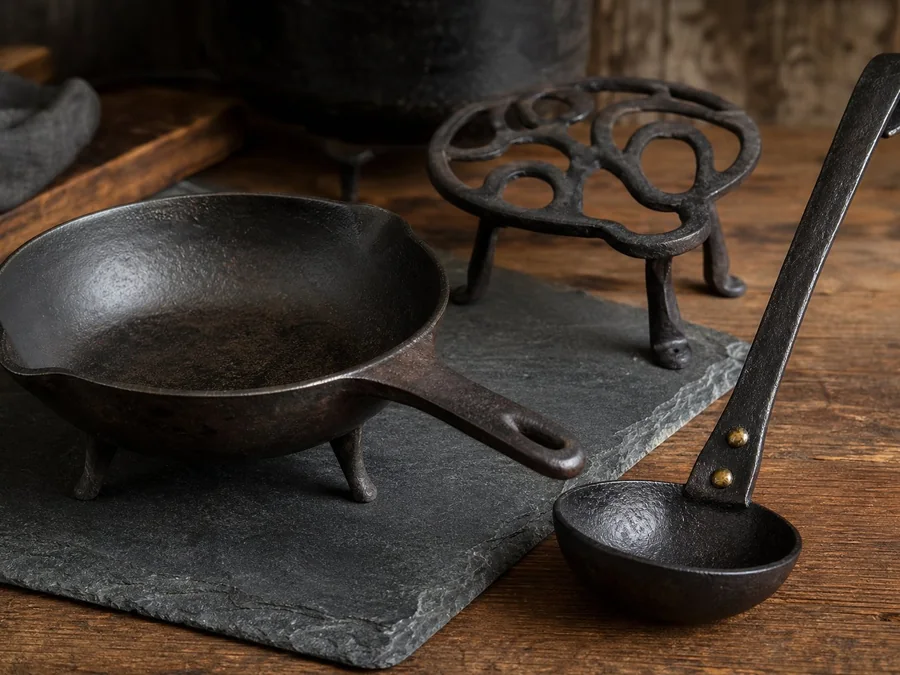
Seasoned American cast-iron spider skillet with wrought-iron trivet and brass-riveted ladle
CAT-1872-AP Appalachian Foothills

Forged Iron Spider Skillet & Trivet

Three-legged hearth spider skillet paired with a hand-forged scrollwork trivet and long-handled iron ladle secured with twin solid brass rivets.

Antique American brass balance scale beside hand-blown amber glass apothecary bottles
CAT-1908-NE New England Mercantile

Brass Balance Scale & Apothecary Glass

Weighted pedestal balance scale with suspended brass weighing pans accompanied by four hand-blown amber apothecary bottles and ground-glass stoppers.

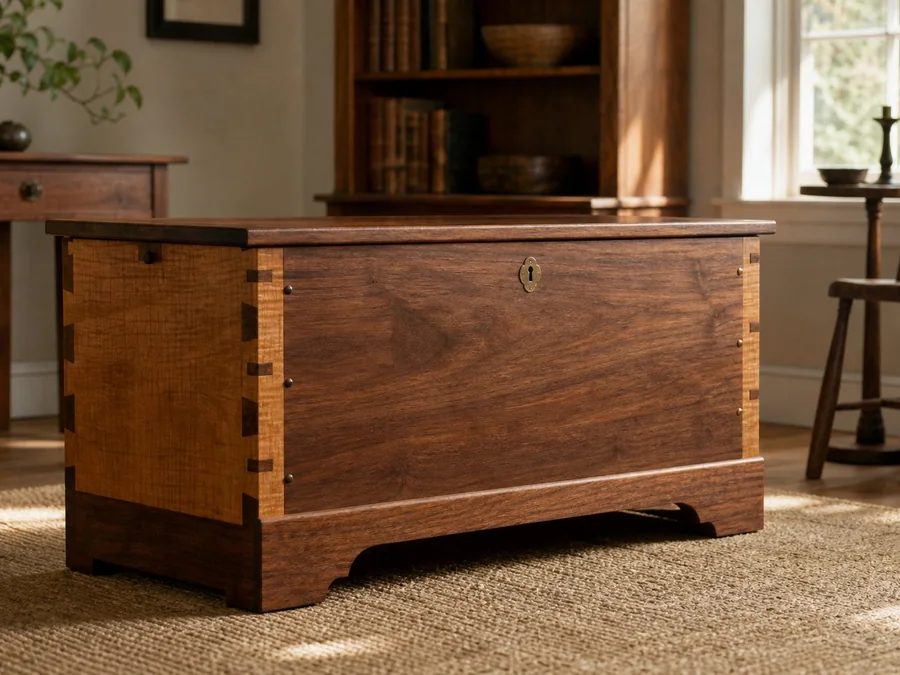
Heirloom Shaker-style walnut and tiger-maple blanket chest with hand-cut dovetail joinery
CAT-1856-SH New England Shaker

Walnut & Tiger-Maple Dovetail Chest

Six-board heirloom blanket chest uniting dark American black walnut front panels with curly tiger-maple sides, wooden pegs, and a brass keyhole plate.

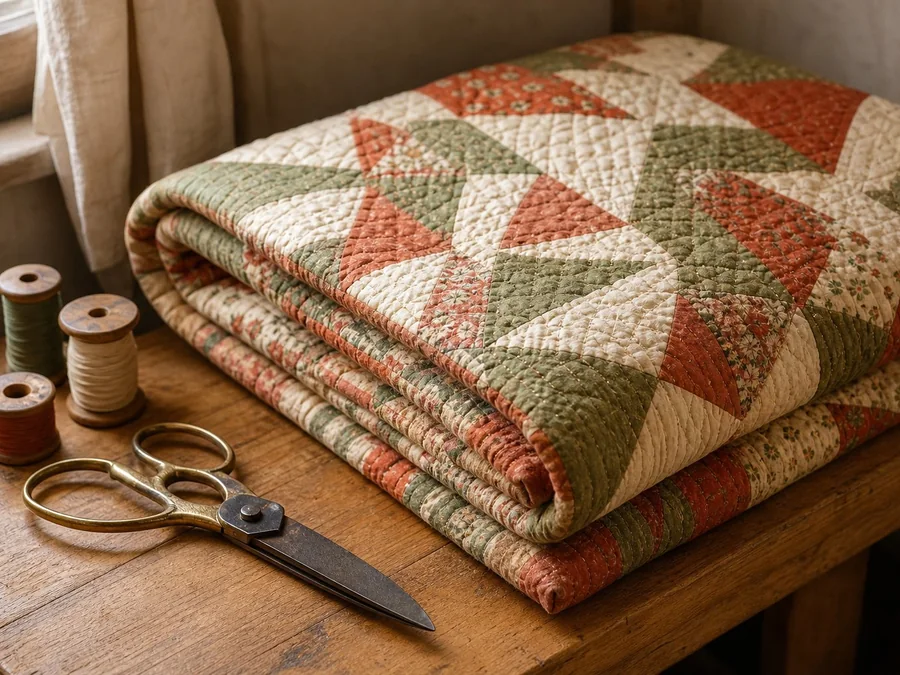
Vintage American hand-pieced terracotta and sage patchwork quilt beside brass tailoring shears
CAT-1934-HL Heartland Farmstead

Hand-Pieced Calico Quilt & Brass Shears

Closely quilted Depression-era cotton patchwork coverlet in madder terracotta, sage green, and cream calico, shown with forged brass-handled shears.

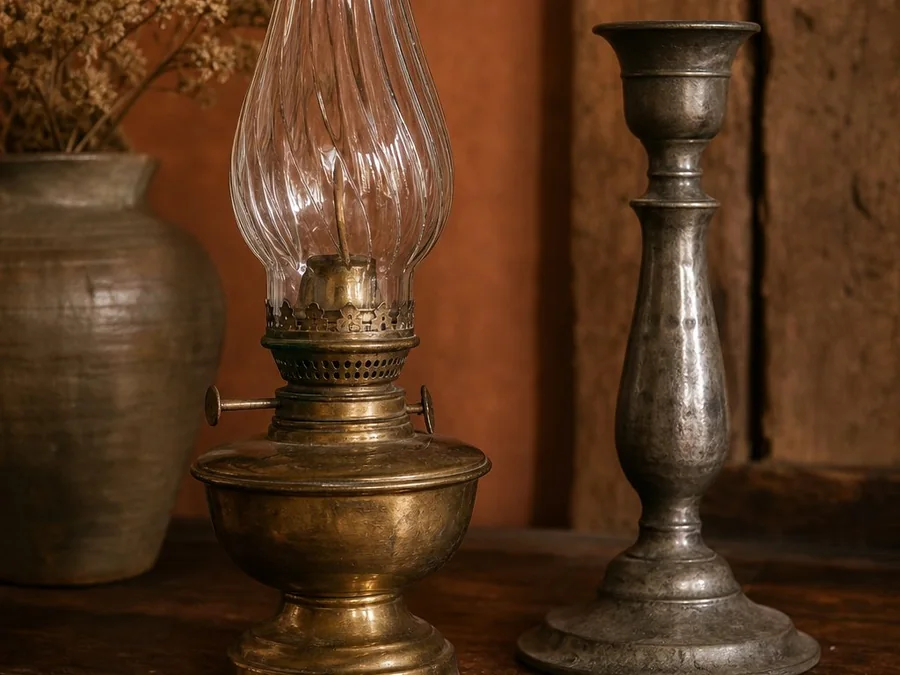
Early twentieth-century patinated brass parlor oil lamp with fluted chimney and pewter candlestick
CAT-1914-NE New England Parlor

Spun Brass Parlor Lamp & Pewter Stick

Weighted oil parlor lamp featuring twin wick-adjustment thumbwheels and a swirled fluted glass chimney beside a hammered American pewter candlestick.

Regional Craft Spotlight

Three Pillars of American Domestic Heritage

Before mass-stamped plastics reshaped the household, rural blacksmiths, joiners, and potters engineered everyday tools meant to endure across three generations.

Hand-cut dovetail joinery on antique American walnut and curly maple blanket chest
Asymmetrical hand-sawn dovetails and pegged base molding, ca. 1856.
Joinery & Timber Lineage

Air-Dried Hardwoods & Hand-Cut Dovetails

Early American cabinetmakers selected slow-growth black walnut, curly tiger maple, and chestnut milled during winter dormancy. Inspecting the slight irregularity of saw kerfs and scribe lines along a drawer or blanket chest corner reveals genuine bench work.

  • Timber Pairing: Quarter-sawn walnut panels framed by figured maple stiles
  • Fastening: Tapered hardwood pegs driven into draw-bored mortises
  • Hardware: Period-accurate cast brass escutcheons with hand-filed wards
Compare Options & Care Guide
Footed antique cast-iron skillet and hand-forged wrought-iron hearthware on dark slate
Bottom-gated cast iron paired with hammered wrought-iron hearth tools.
Hearth & Foundry Provenance

Gate-Marked Cast Iron & Riveted Wrought Utensils

Prior to the twentieth century, American foundries poured molten iron into green-sand molds from the underside, leaving a raised linear gate mark across the vessel base. Paired with hand-forged wrought ladles, these pieces anchor authentic hearth collections.

  • Foundry Signature: Raised bottom gate scar indicating pre-1895 casting
  • Rivet Detail: Hand-peened solid brass rivets joining bowl to tang
  • Preservation: Dry carbon brushing and light beeswax sealing
Examine Specification Ledger
Archival Reference Ledger

Material & Authentication Benchmarks

Key physical markers documented across our American vintage finds directory to verify age, regional origin, and uncompromised structural integrity.

Salt-Glaze Kiln Texture
Authentic nineteenth-century stoneware exhibits a subtle pebbled orange-peel sheen where vaporized rock salt fused with silica clay inside wood-fired kilns.
Hand-Forged Nail Geometry
Rectangular cut shanks with four-facet rose heads on backboards and chest bottoms confirm pre-1890 construction before wire-drawn nails became standard.
Natural Brass Oxidation
Genuine antique spun and cast brass develops an even amber-brown oxide film around thumbwheels and rivets that cannot be mimicked by chemical lacquers.
Free-Blown Glass Pontils
Early American apothecary vessels and lamp chimneys show faint glass-blower pontil scars, tiny seed bubbles, and asymmetrical lip tooling.
Feed-Sack & Indigo Prints
Mid-century rural quilts combine tightly woven printed cotton flour sacks with hand-quilted cotton batting and bias-cut edge binding.
Non-Invasive Conditioning
Every archival specimen is documented with zero synthetic polyurethane coatings, preserving breathable wood pores and historical tool marks.
Bespoke Curation Tool

Build Your Archival Selection Profile

Configure a custom specification brief by selecting your preferred American region, material discipline, historical era, and surface preservation standard.

1. Regional Provenance Focus

2. Primary Material Discipline

3. Historical Era Window

4. Surface Conditioning Preference

Curated Specification Summary

Archival Reference: MM-PA-SG-VD-OP

Regional Provenance
Pennsylvania Dutch Heartland
Primary Material
Salt-Glazed Stoneware & Iron
Historical Era
Victorian Domestic (1865–1900)
Conditioning Standard
Original Unaltered Patina

Pairs cobalt-decorated stoneware crocks with seasoned wrought-iron trivets and hand-forged hearth utensils. Documented for Pennsylvania Dutch Heartland study (Victorian Domestic 1865–1900) under Original Unaltered Patina preservation standards.

Curator Notes

Collector Questions & Provenance Guidance

Practical answers for stewards and collectors documenting nineteenth- and early twentieth-century American household finds.

How is regional provenance established for household antiques?

Our curators examine potter stamps, foundry mold marks, hand-cut joinery profiles, nail head geometry, and regional timber species to attribute artifacts to New England, Pennsylvania Dutch, Appalachian, or Heartland workshops.

Why should original patina remain unstripped on brass and walnut?

Original surface oxidation and aged hand-rubbed finishes preserve historical integrity and tactile warmth. Abrasive stripping erases decades of domestic wear and diminishes archival authenticity.

What makes salt-glazed American stoneware distinct?

Salt-glazed stoneware was fired at high temperatures with rock salt introduced into the kiln, forming a durable, non-porous orange-peel silicate glaze ideal for pantry preservation.

How should heirloom hand-pieced quilts be stored?

Fold quilts loosely along alternating seams using acid-free unbleached cotton sheeting, away from direct sunlight and damp cedar trunks that can stain vintage fibers.